Showing posts with label Nauvoo Temple. Show all posts

Saturday, May 7, 2011

Alternatives to Angel Moroni Statues

I've already written a lengthy post about Angel Moroni statues on The Church of Jesus Christ of Latter-day Saints' temples.  This post is about other notable temple toppers.

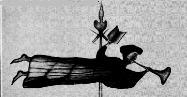
The original and rebuilt Nauvoo Illinois Temple had(have) a bell tower on the top.  Yes, the original temple had a flying Angel Moroni weather vane and the rebuilt one has a statue of Moroni.  In addition to this, both temples contain(ed) a bell as the tower is a bell tower.  The tower in the completed temple can be seen in the picture on the left.  The original temple bell was taken with the saints from Nauvoo when they crossed the plains and settled in Utah.  It currently sits atop a tower at temple square, south and a little west of the Salt Lake Tabernacle.
I like the idea of a temple bell.  On my mission I remember being in Cambridge at Easter and hearing church bells ring out from Great St. Mary's Church.  It was impressive.  I would love to see a bell added to another temple, although I don't expect to see one.  This is mainly  because we like to build in neighborhoods and bells might annoy neighbors.  Also, now days we (all of society, not just the church) don't tend to use bells very often.

This brings up another temple topper, also from the Nauvoo Temple - a clock tower.  The Nauvoo Temple tower has clocks on all four faces.  This was mainly added because it was popular to add clock towers in the 1840s.  Also, at that time, most buildings were considered a community asset and would have many functions.  Adding a clock would provide one more community service.  You have probably also guessed that the Nauvoo Temple bell was installed for use with the clock.  To this day it chimes the hour at temple square.  It probably wasn't intended, but a clock can act as a symbol of time and eternity and of order.


Weather vanes are another temple topper that has been used a few times.  The Kirtland Ohio Temple was built with a weather vane (the current one is a replica).  The original Nauvoo Illinois Temple had a weather vane angel that would have helped people determine the wind direction (you'll notice that the Nauvoo Temple had a lot of practical features for the community).  The St. George Utah Temple was built next and has a weather vane on its tower.  Similar weather vanes top the Logan Temple east and west center towers.  Today one faces north and the other faces south.  I assume that they originally rotated with the wind, but have since been replaced when the towers were replaced with fiberglass replicas.  The weather vanes on these three temples are all arrows.

The Cardston Alberta Canada Temple has no tower or spire, however its gently sloping pyramidal roof has a light or lantern at its peak, a fitting topper to a temple.

The remaining temples have had some sort of finial or spire when they haven't had Angel Moroni statues but have had towers.

Please comment and let us know what you think about these unique temple features from before Angel Moroni statues became standard.  I like these unique features and hope we keep them intact.

Sunday, May 1, 2011

Holy of Holies in Temples of The Church of Jesus Christ of Latter-day Saints

The Holy of Holies is the most sacred part of a temple and is only really in one temple today - the Salt Lake Temple.  Little known is the fact that several temples have had Holy of Holies.

To start out I should point out that the term "Holy of Holies" comes from the Bible and referred to the most sacred part of the Tabernacle, Solomon's Temple, Zerrubbabel's Temple, and the Temple of Herod.  The term "Most Holy Place" is usually another name for the Holy of Holies.  The room contained the ark of the covenant and could only be entered by the High Priest once a year.  It was separated from "the holy place" by the veil of the temple.  In this way, our current temple celestial rooms are somewhat comparable to the Jewish Holy of Holies.  Still, the rooms are quite a bit different.  This should be expected as the Jewish temples were Aaronic Priesthood preparatory temples while ours are Melchizedek Priesthood higher law Christian temples.

The Holy of Holies in our temples have some similarities to their ancient counterparts.  They have limited access - the prophet and occasionally others can enter the room.  They are also used for heavenly visitations.  Anciently, the Holy of Holies was where Gabriel appeared and announced to Zacharias that his wife would give birth to John the Baptist.  In today's Holy of Holies, the prophet may receive similar heavenly visitations and directions on how to run Christ's church.

You might wonder what else "Holy of Holies" is used for.  Apparently it is used for the higher ordinances of the priesthood.  Apostle James E. Talmage said that it is "reserved for the higher ordinances in the priesthood relating to the exaltation of both living and dead".  See his book The House of the Lord for this information. There are several temple ordinances mentioned in the scriptures which aren't performed often or even talked about regularly.  I suspect that some of them might performed in the holy of holies.  Here is one such verse:
Therefore, verily I say unto you, that your annointings, and your washings, and your baptisms for the dead, and your solemn assemblies, and your memorials for your sacrifices by the sons of Levi, and for your oracles in your most holy places wherein you receive conversations, and your statutes and judgments, for the beginning of the revelations and foundation of Zion, and for the glory, honor, and endowment of all her municipals, are ordained by the ordinance of my holy house, which my people are always commanded to build unto my holy name.
D&C 124:39
Notice that this verse says "most holy places" which might mean "Holy of Holies".  I suspect that the "memorials for your sacrifices by the sons of Levi" may simply refer to the sacrament served during solemn assemblies.  In another place we read:

And he shall be received by the ordinance of the washing of feet, for unto this end was the ordinance of the washing of feet instituted.
And again, the ordinance of washing feet is to be administered by the president, or presiding elder of the church.
It is to be commenced with prayer; and after partaking of bread and wine, he is to gird himself according to the pattern given in the thirteenth chapter of John's testimony concerning me. Amen.                                 
D&C 88:139-141
This verse refers to the ordinance of washing of feet - particularly in relation to the School of the Prophets.  This ordinance was instituted by Jesus Christ just prior to his crucifixion and is a priesthood ordinance.  Christ gave this ordinance to his apostles and I highly suspect that the same ordinance is given to any apostle, although it is also apparently given to others as well.  It would not surprise me if the Holy of Holies was used for this ordinance, although it may be performed elsewhere in the temple.

Lets leave this chain of thought and instead get to the architecture of the Holy of Holies and when they have been used.

You can consider the Kirtland Temple to have included a Holy of Holies.  The assembly halls could be divided using curtains (essentially veils) and on April 3, 1836 the Melchizedek Priesthood pulpits were curtained off with Joseph Smith and Oliver Cowdery inside when Jesus Christ, Moses, Elias, and Elijah appeared to them, accepted the temple, and conferred priesthood keys and the sealing power.  For this reason, I think you could consider the pulpits in the Kirtland Temple as an early Holy of Holies.

The original Nauvoo Temple included a sealing room identified as the Holy of Holies.  This was room 1 or the clerk's office.  It was a sealing room, clerk's office, and Holy of Holies.  Apparently it was used so much for the higher ordinances that other rooms had to be used for sealings so the room could be used for the higher ordinances.  See this article for more details.  Here is a drawing of a sealing room in the original Nauvoo Temple from lds.org.  Details of how the room looked are probably guessed, but it gives you some idea of what the Holy of Holies may have looked like.

I don't know if the St. George Temple had a Holy of Holies, but I suspect it at least had a sealing room occasionally used for that purpose.

The Logan Temple used to contain a sealing room sometimes used as the Holy of Holies.  This was the Gold Room.  The room had gold directly applied to the plaster walls using a hot iron.  As you can see, intricate patterns were made on the walls.  The curtain is covering a doorway leading into the southeast tower spiral staircase.  Also, notice the stained glass window.  The windows were removed when the temple was gutted and remodeled in the 1980s.  You can see the windows in the Church History museum (and I think the Manti Temple cafeteria has some of them as well - they looked familiar last time I ate there). 
Logan Temple Gold Room - Sometimes a Holy of Holies

The Manti Temple also included a Holy of Holies.  This one is directly off the celestial room and is still in the temple.  It has its door left open so you can see the room and is now officially a sealing room, although one you can't use.  Apparently President Hinckley wanted the room kept special because of its history (according to temple workers at the Manti Temple who said the room is rumored to have been a Holy of Holies.  As you can see, the room is extremely ornate.  I particularly like the arched area above the altar and the intricate detailing used there.  Even small details such as the door handle and the hinges on the door are covered in symbolic details.  This really is a fitting Holy of Holies.
Manti Temple Sealing Room - Sometimes a Holy of Holies
The Salt Lake Temple is currently the only temple with a permanent Holy of Holies.  This room is accessed from the celestial room and is in between two sealing rooms that are also directly off the celestial room.  The room is round with a dome.  In fact, the room directly above the Holy of Holies is called the dome room because the dome ceiling of the Holy of Holies takes up the middle of the room.  As you can see, the room has numerous art glass windows in the dome (lights in the dome room light them up).  There is also an authentic Tiffany Glass window depicting the First Vision (which can be seen on the other side of the window from the sealing office).  The glass window says
IF ANY OF YOU LACK WISDOM LET HIM ASK OF GOD
THAT GIVETH TO MEN LIBERALLY AND UPBRAIDETH NOT
AND IT SHALL BE GIVEN HIM
                                     James 1-5v
THIS IS MY BELOVED SON       HEAR HIM
The room contains other nice architectural details.  Carved faces are found on the arches.  Vines are found on the columns.  Sconces, a chandelier(s?), and art glass windows bring a lot of light into the room.  You can also see that the room has intricate carvings.  Despite all of this, the room is remarkably restrained for a room with so many intricate details. In Talmage's book The House of the Lord he states that the Holy of Holies is
reached by an additional flight of six steps inside the sliding doors.  The short staircase is bordered by hand-carved balustrades, which terminate in a pair of newel-posts bearing bronze figures symbolizing innocent childhood; these support flower clusters, each jeweled blossom enclosing an electric bulb.  On the landing at the head of the steps is another archway, beneath which are sliding doors; these doors mark the threshold of the inner room or Holy of Holies. . . 
Talmage then describes the Holy of Holies:
The floor is of native hard wood blocks, each an inch in cross section.  The room is of circular outline, eighteen feet in diameter, with paneled walls, the panels separated by carved pillars supporting arches; it is decorated in blue and gold.  The entrance doorway and the panels are framed in red velvet with an outer border finished in gold.  Four wall niches, bordered in crimson and gold, have a deep blue background, and within these are tall vases holding flowers.  The room is practically without natural light, but it is brilliantly illuminated by a large electrolier and eight side clusters of lamps.  The ceiling is a dome in which are set circular and semicircular windows of jeweled glass, and on the outside of these, therefore above the ceiling, are electric globes whose light penetrates into the room in countless hues of subdued intensity. . .
Salt Lake Temple Holy of Holies
In many ways we only need the one Holy of Holies because a major function of the room is for the prophet to go and pray and receive revelation and heavenly visitations relating to how the church should be run.  Yet, it also has its function for higher ordinances and the prophet (or apostles) may wish to use a Holy of Holies when they are away from Salt Lake.  For these reasons, sealing rooms in temples are occasionally used as Holy of Holies.  I was told in the Preston England Temple that one of the sealing rooms in that temple is designated to be used for the prophet or apostles when needed.  When they need the room it is temporarily set apart for that purpose, so essentially it is occasional a Holy of Holies.  This may also explain why many temples have one small sealing room that is really nice, but impractical for large weddings.  It is probably used only for sealings for the dead and also rarely as a Holy of Holies.

I hope you found this interesting.  You may comment but remember that this is on the internet and these are sacred rooms, so let's be restrained in our comments on this one.

Here is a picture of the Dome Room, the room above the Holy of Holies in the Salt Lake Temple.  It is just used to access the ceiling lights above the Holy of Holies and has been used as a dressing room.
Dome Room Above Holy of Holies in the Salt Lake Temple
Talmage describes the Dome Room as follows:
. . . the large Dome Room, thirty nine by forty four feet.  On the south side are three oval windows, and opposite these on the north are semi-discs of pebbled glass looking down into the Celestial Room and set in the arches thereof.  In the center appears a large dome, fifty one feet in circumference at its base and seven feet high.  This is set with seventeen jeweled windows and may be readily recognized as the ceiling of the Holy of Holies . . . In each of these windows electric bulbs are placed, and it is from these the room below derives its beauty of ceiling illumination and coloring.  The walls are hung with portraits of Church authorities.  No specific ordinance work belongs to this apartment. . .
For more information, please read James E. Talmage's The House of the Lord first printed in 1912.

Saturday, April 30, 2011

Latter-day Saint Temple Murals - Part 7 - The Rebuilt Nauvoo Temple Murals

In recent years (the last decade or so) The Church of Jesus Christ of Latter-day Saints has begun using painted murals in temple endowment rooms.  The rebuilt Nauvoo Temple is an excellent example.  I suspect that gathering the artists for this project and having murals painted in a new temple was a catalyst that got the church to use murals in all new temples again.  I can't confirm it, but a lot of the details required for the Nauvoo Temple have started showing up in other temples including murals.

The original Nauvoo Temple lacked murals.  It was completed (with some parts only roughly done) shortly before the Saints fled Illinois and headed to Utah.  This, and the fact that murals didn't begin being used until the Logan Temple was built in 1884, meant that the temple didn't have murals.  The rebuilt Nauvoo Temple was decorated with grand details that the saints probably would have added given proper time and means.  I think the murals are well done and have some interesting aspects.

The artists intentionally emulated the Hudson River School of painting popular in the mid 1800s so the work would fit in with the historical nature of the temple (see this article).  At the same time, they clearly have created a fusion style as features such as nebulae viewed from the Hubble Space Telescope in the creation room murals would clearly not have been painted in any art in the 1800s.

Below is the creation room mural.  One notable feature is that the landscapes are based on east coast locations with New England shorelines representing the newly formed world.  This starts a pattern that is completed in the world room where the history of the church is played out by referencing notable locals.  Starting in New England, the church eventually made its way to the west.
Below is the garden room mural.  Beautiful depictions of the Tree of Life and Tree of Knowledge of Good and Evil are found in the front of the room.  I recall that the tree of life was covered in brilliant white fruit.  Notice that there are carved sheaths of wheat in the door frames (unrelated to this post, but symbolic):
Below is the world room mural.  I really like this interpretation of a world room and I would rank it as my second favorite, just below the current Manti Temple world room mural.  Several things are going on in this painting that you may not notice at first, but which add a lot of symbolism and interest to the painting.  First, the seasons exist in this temple and represent time and seasons as a feature of the fallen world.  This is also used to make the room lighter symbolizing progression.  Winter's white snows brighten the front of the room and make the area around the altar, and the way into the terrestrial room, the brightest part of the room.  The artists have also intentionally represented areas from church history in this mural.  It starts with spring in Vermont where Joseph Smith was born and follows church history locations such as New York, Ohio, Missouri and Illinois, and ends with winter in Utah's Wasatch Mountains.  In this way, the room symbolizes the journey through life as we follow the church and the path God lays out for us.
 I read somewhere that the Nauvoo Temple also includes celestial room murals.  This isn't true (I've been there twice and it does not).  It does include a nice painting of the world after the flood, and I think that is what is mistaken as a celestial room mural.  A small painting is not a mural.  But it is a nice addition to the Nauvoo Temple celestial room.

I would love to hear what you think about these murals, so please comment.

Monday, April 18, 2011

Temple Spiral Staircases

When The Tolmans suggested that I write a post on The Church of Jesus Christ of Latter-day Saints' temple staircases, I don't think they considered how broad of a topic that really is.  There are internal and external staircases.  There are multiple configurations of staircases.  I've been organizing what to write on staircases for the last week or two and have decided that the topic will require multiple posts.  I'm going to start with spiral staircases.

Spiral staircases are perhaps the most impressive type of staircase.  They require great skill to build.  Their form has a special grace that makes them among the most attractive staircases around.  The Kirtland Ohio Temple staircases are curved, although I don't think you would consider them full spiral staircases.  Here are some examples of temples with proper spiral staircases:

The Nauvoo Illinois Temple (original and rebuilt) has spiral staircases without central supports, similar to those in the Manti Temple.  I was told that in the rebuilt Nauvoo Temple the staircases are not free standing because they couldn't figure out how to make them work.  It is much more likely that the engineers decided not to make them free standing for other reasons and decided this was fine because they still look the same.


When I visited the Nauvoo Temple, the workers told us that President Hinckley asked the nearby Shaker community (it may have been the Mennonites) to do the woodwork for the temple including these very nice hardwood railings.  If you don't know, the Shakers (and Mennonites) are famous for their craftsmanship.  The Shaker congregation was invited to tour the completed temple before its dedication.  This is a great example of including other faiths and getting along with others as Christ would have us do. The rebuilt Nauvoo Temple does not include spiral staircases in all four towers.  Apparently the current building codes would only allow a few to be spiral.  They have wisely chosen to have a spiral staircase  lead to the dressing rooms and the baptistery so that all patrons will get to see the staircases.

Another spiral staircase is found in the Nauvoo Temple bell tower seen here.


The St George Utah Temple was the next built and it has spiral staircases in the corners.  I haven't found a photo of them yet; however, I asked to see them the last time I visited the St. George Temple and they showed them to me.  I recall that they had central supports.  I also noticed that they don't air condition the staircases - they were really warm.

The Logan Utah Temple was built next and it has spiral staircases in the four corner towers.  I think they are still there in the remodeled temple, although I have never seen them and do not know if they will show them to you.  The pictures to the left show these staircases.  The first shows them looking up from the assembly hall level.  They are free standing from this level up.  The next photo shows a view looking down and the last shows a view walking down the stairs.  

 
When the Logan Temple was being remodeled they wanted to run conduits through the center supports of the spiral staircases.  When they tried this they discovered that the central supports are solid stone.

The Logan Temple has had several fires over the years.  A fire in 1917 destroyed a spiral staircase that used to be in the middle of the temple (led from the celestial room back to the first floor) and it was replaced with an orthogonal staircase, which has since been demolished completely when the temple was gutted.

The Manti Utah Temple was built next and has some of the most unique spiral staircases in the world.  In the two west corner towers there are freestanding spiral staircases without central supports.  If you attend this temple, ask a worker to see the staircases and they will take you to see them.  They have incredible craftsmanship.  When they restored the temple for the centennial they found something like 2 creaks in the one staircase and none in the other, despite being heavily used by temple workers and used by patrons to access several sealing rooms in the towers.  The seams between pieces of wood on the railings are also extremely difficult to find.
 
I said that these were some of the most unique staircases in the world.  That is because there are only a few free standing spiral staircases that lack central supports in the world.  I believe there are only eight in the U.S. with two being in the Supreme Court Building (those are elliptical).  So the Manti Temple spiral staircases are really special.

One of the staircases goes up clockwise and the other counterclockwise.  They really are an impressive sight and a great asset of the Manti Temple.


The Salt Lake Temple was built next and it includes eight spiral staircases.  All have central supports.  The four corner towers have solid granite staircases.  These have a nice dark wood wainscot.  I have only seen these towers from the baptistery level.  There they have actually installed restrooms on the staircase (weirdly shaped and tight, but interesting).

The other four spiral staircases are found in the priesthood assembly hall.  Here, four spiral staircases provide access to the balcony seating.  These show fine woodwork. and wonderful carpenters' skills.  I hope to see them some day.


The next temple to include spiral staircases, that I am aware of, is the San Diego California Temple built in 1993.  It includes a very modern spiral staircase.  As you can see, the staircase has exquisite woodwork.  It is also very open, which is important as it allows all the light coming through the art glass windows to permeate the temple.

Looking up from this staircase you get this wonderful view.
The last spiral staircase that I know of in a Latter-day Saint temple is found in the newly built Copenhagen Denmark Temple.  This temple was remodeled from an existing church that was gutted, so there is a chance that the staircase was part of the original church.  If not, I am glad to see the church go out of its was to include a spiral staircase.  This staircase is also not centrally supported, making it even nicer.  I love how the light floods into the temple from a well placed skylight.

Those are the spiral staircases I know of in Latter-day Saint Temples.  If you know of others please comment.  Also, If you have a photo of the St. George Temple spiral staircases please let me know.  I would love to have one.  Please comment and let us know what you think about these staircases.  In the future I will post about other temple staircases.  There is a lot more variety in them than you may realize.

Friday, April 8, 2011

The Church of Jesus Christ of Latter-day Saints Historical Temple Artifacts

While most Latter-day Saint temples have historical artifacts placed in their cornerstones, several temples built by The Church of Jesus Christ of Latter-day Saints have historical artifacts on display.

I was walking through the Ogden Temple one day and right by the clothing rental I noticed a copy of The Book of Mormon on display.  I believe it was a first edition, although it may have been a few years newer.  I assume they will keep it on display once the temple remodel is completed.

In the Manti Temple there are many neat things to see such as the spiral staircases.  One item that can be overlooked is a piece of temple clothing framed and hanging on a wall in a hallway.  If I remember correctly, the item was from the 1850s.  It is in the hallway leading from the recommend desk to the clothing rental.

The Nauvoo Illinois Temple was rebuilt in 2002.  Both times that I visited it I asked the workers to show me what they could.  They showed me the sealing rooms, baptistery, and assembly hall.  They also showed me the historical artifacts that are now in the temple.  In the recorder's office you can see a sword owned by Joseph Smith from when he led the Nauvoo Legion.  The sword is engraved by him with his name, and also with the names of each person who owned it through the years.  Eventually it was donated to the church and is now in the temple.  This isn't the only artifact.  The hallway north of the assembly hall contains several.  There is a framed set of original keys to the temple.  Several are replicas, but some keys in the set are the originals.  There are also several pieces of framed temple clothing dating to Joseph Smith's time.  I believe the first framed set belonged to Lucy Mack Smith, Joseph Smith Jr.'s mother.  There is another piece of temple clothing further down the hall.

These temple artifacts are nice to see.  I particularly like the old temple clothing as it allows me to compare how pieces were then to how they are now and determine what is merely style, and what is potentially significant and symbolic.  It also let me see a way something used to be.  I didn't realize we could use more white.  I won't say more on that.

Do you know of any historical artifacts on display in temples?  Please comment.

Tuesday, April 5, 2011

Words as Temple Decoration

Several temples of The Church of Jesus Christ of Latter-day Saints use words to decorate the temple.  For example, at the entrance to the Cardston Alberta Temple there is this verse by Orson Whitney that I found here.  Here is the verse:

Where spreads a feast unknown to festive halls.
Freely partake, for freely God hath given
And taste the holy joys that tell of heaven.
Here learn of Him who triumphed o’er the grave,
And unto men the keys, the Kingdom gave;
Joined here by powers that past and present bind
The living and the dead perfection find.
 In other temples a verse of scripture is used.  In the Mesa Arizona Temple, above the celestial room doors (seen from the grand staircase) is part of D&C 93:36:
THE GLORY OF GOD IS INTELLIGENCE
I think it was also in the Mesa Temple (but may have been elsewhere) that the beatitude found in Matthew 5:8 is inscribed on a wall:

BLESSED ARE THE PURE IN HEART FOR THEY SHALL SEE GOD
The Idaho Falls Temple has  Habukkuk 2:20 on the wall in a foyer area:
BUT THE LORD IS IN HIS HOLY TEMPLE: LET ALL THE EARTH KEEP SILENCE BEFORE HIM.
Of course most temple exteriors contain the words:
HOLINESS TO THE LORD
THE HOUSE OF THE LORD
The Salt Lake Temple contains a scroll stone engraved with the words:
I AM ALPHA AND OMEGA
The original Nauvoo Temple had inscriptions in the lower assembly hall.  Above the Melchizedek Priesthood pulpits, following the arch of the ceiling in gilded letters were the words:
THE LORD HAS SEEN OUR SACRIFICE - COME AFTER US
Both the Kirtland Ohio and Nauvoo Illinois Temples had assembly halls with three initials on each of the 24 pulpits.  The Kirtland Temple had the Melchizedek Priesthood pulpits engraved with the following from top to bottom:

M.P.C. (Melchizedek Presiding Council)
P.M.H. (Presiding Melchizedek High Priesthood)
M.H.P. (Melchizedek High Priesthood)
P.E.M. (Presiding or Presidency Elders Melchizedek)
On the eastern Aaronic Priesthood side the initials are from top to bottom:

B.P.A. (Bishop Presiding over Aaronic Priesthood)
P.A.P. (Presiding or Presidency Aaronic Priests)
P.T.A. (Presiding or Presidency Teachers Aaronic Priesthood)
P.D.A. (Presiding or Presidency Deacons Aaronic Priesthood)
 This website claims that in the Nauvoo Temple the initials were, on the Melchizedek Priesthood side:

P.H.P. (President of the High Priesthood)
P.S.Q. (President of the Seventy Quorums)
P.H.Q. (President of the High priests Quorum)
P.E.Q. (President of the Elders Quorum)
 And on the Aaronic Priesthood side there were the initials:
P.A.P. (President of the Aaronic Priesthood)
P.P.Q. (President of the Priests Quorum)
P.T.Q. (President of the Teachers Quorum)
P.D.Q. (President of the Deacons Quorum)
The assembly hall in the Salt Lake Temple contains inscriptions above the pulpits on each end.  They are:
Aaronic Priesthood
and
Melchizedek Priesthood


The Manti Temple doorknobs contain what is claimed to be stylized Arabic (stylized to the point where the inscription cannot be interpreted today), a common art form used by Masons (the doorknob maker was a mason).  For more information, read the book The Manti Temple.  This book was printed to commemorate the centennial of the Manti Temple.

In Islam since images are often considered idol worship, their mosques and other buildings are often decorated with verses from the Koran, usually extremely stylized.  So using text to decorate religious architecture is not even unique to Christianity (which has many examples of using scriptures to decorate churches).  I also read a newspaper article a few years ago that featured an old Church of Jesus Christ of Latter-day Saints chapel with scriptures written on each of the roof trusses visible in the chapel.

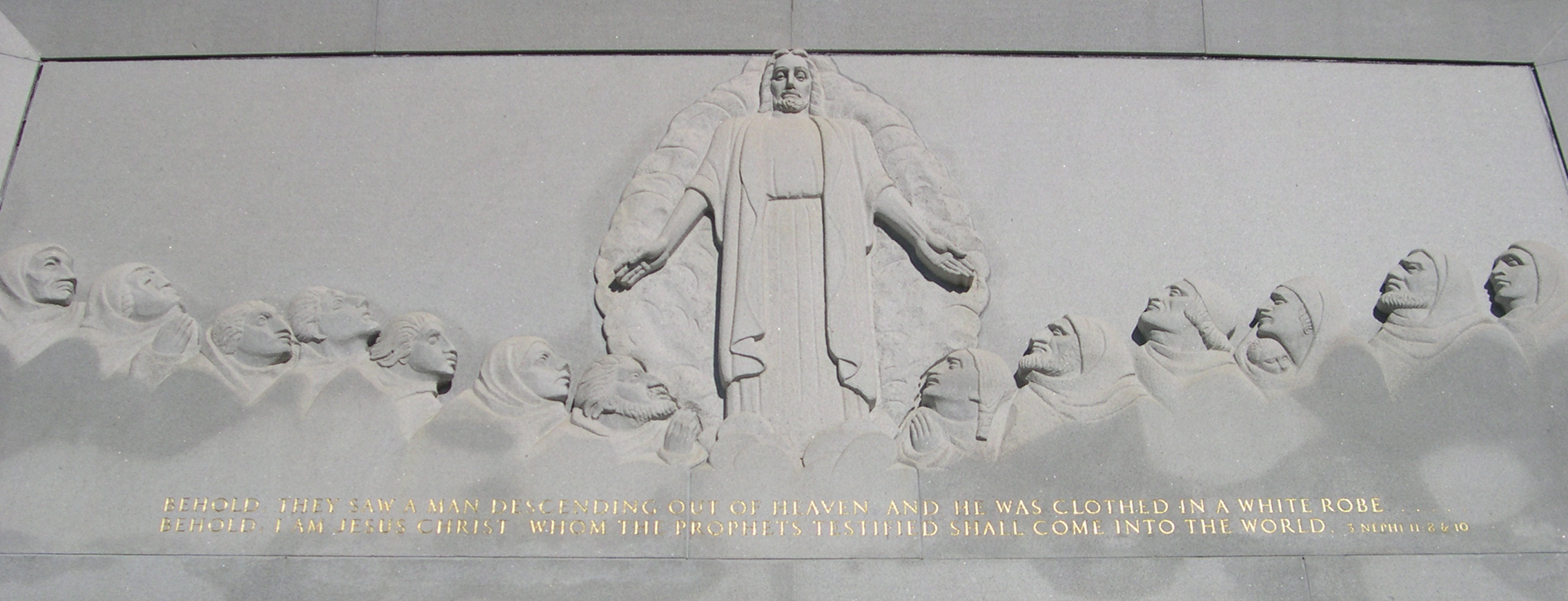
The Oakland California Temple has relief sculptures of Christ in the New Testament and The Book of Mormon on the temple exterior.  On the New Testament Side the inscriptions are:
BLESSED ARE THE PURE IN HEART FOR THEY SHALL SEE GOD -Matt 5:8
SEEK YE FIRST THE KINGDOM OF GOD AND HIS RIGHTEOUSNESS -Matt 6:33
On The Book of Mormon side it reads:
BEHOLD, THEY SAW A MAN DESCENDING OUT OF HEAVEN AND HE WAS CLOTHED IN A WHITE ROBE
BEHOLD, I AM JESUS CHRIST WHOM THE PROPHETS TESTIFIED SHOULD COME INTO THE WORLD- 3 Ne 11:2&10

There is also a large plaque quoting 3 Nephi 17 in the courtyard of the Oakland Temple.

Surely there are many more examples of words being used to decorate temples.  Words can remind of of scriptures and easily put us in the right frame of mind.  Also, they are easier to understand than the hidden symbols frequently used in temples.  Scriptures can bring the spirit and remind us of things we should be focused on.

Although not decorative, when the Logan Temple was gutted they found a wall full of engravings in the plaster hidden beneath the surface.  The inscriptions (with spelling errors galore) had names, mentioned that they were being persecuted, and gave other historical information.

I hope some of you know of engravings on temples and can add a comment telling us how words are used to decorate temples.  We can also discuss how words could be used in future temple architecture, or what you think of the inscriptions I have highlighted so far.  Please comment.

Sunday, March 20, 2011

Latter-day Saint Temple Murals - Pt 1 - The Beginnings of Temple Murals

Many temples of The Church of Jesus Christ of Latter-day Saints have murals painted on the walls of the endowment rooms and occasionally in other areas of the temple such as the baptistery.  I'm going to discuss the development of temple murals in a series of posts, beginning with this one.

The first Latter-day Saint temples didn't have murals.  The Kirtland Ohio Temple was mainly a place for revelation to be received and heavenly messengers (angels and Jesus Christ) to come and give instruction and priesthood keys necessary for future temple ordinances.  The Nauvoo Temple was the first temple where the endowment ceremony was performed.  In this temple, endowments were performed in the attic level partly because as the structure was built members didn't know the endowment was going to be performed there.  To administer the endowment, the room on the top floor was divided using curtains.  Each divided off room section was then used to represent the various parts of life - creation, the Garden of Eden, the current world, the terrestrial world, and finally the Celestial Kingdom of God (Heaven).  Potted plants may have been used to give the rooms some connection to what they were to represent.  The rebuilt Nauvoo Temple contains murals as a tribute to what the early saints may have eventually added if they had stayed in Nauvoo.

When the saints arrived in Utah they started building temples.  While these were under construction, the endowment was given in several places.  The council house (now across the street from the Utah State Capitol Building) was used with curtains dividing a room into endowment areas.  Then the Endowment House was built on temple square and it included potted plants and murals in various rooms.

The next temple built was the St. George Utah Temple in 1877.  It lacked endowment rooms.  One of the two assembly rooms was simply divided into the various rooms for the presentation of the endowment.  In 1881 proper walls were added and murals were painted.
St. George Utah Temple Garden Room

St. George Utah Temple World Room
The first temple with true planned endowment rooms with murals was the Logan Utah Temple.  The Logan Temple was planned with progressive endowment rooms with a lot of movement from room to room during the endowment ceremony.  This movement strengthened the teachings of the endowment.  Patrons would see murals depicting the various parts of the endowment and would move higher and higher in the temple as they moved through the endowment ceremony.  Unfortunately this also meant there were a lot of stairs in the Logan Temple and this partly led to the temple being completely gutted and rebuilt in the 1970s.  This remodeling destroyed (or sometimes simply removed) intricate pioneer craftsmanship, fine detailing, the pioneer murals, and the progressive setup of the endowment rooms.  The Logan Temple inspired the use of progressive endowment rooms with murals in the Manti and Salt Lake Temples, as well as many more temples until the 1950s when presenting the endowment on film temporarily ended the use of endowment room murals.  It is extremely sad that the Logan Temple remodel didn't include progressive endowment rooms or murals in the new endowment rooms currently being used.  Hopefully it will someday be re-remodeled with progressive endowment rooms, murals, and fine detailing - even if the exact room layout cannot be restored.
Original Logan Temple Creation Room
Original Logan Temple Garden Room
Original Logan Temple World Room
Original Logan Temple Terrestrial Room
The murals in these early temples were painted by the pioneers.  Many of these had experience and training from their native countries.  In a future posting I will talk about how the church encouraged the development of better murals and art in temples through the Paris Arts Mission.

Please comment and let us know what you think.

This is an addition to the original post:
The Logan Temple original celestial room also had murals painted on either end of the room.  One was of Joseph Smith going to the Hill Cumorah to receive the gold plates The Book of Mormon was translated from.  The other mural shows Joseph Smith and Oliver Cowdery receiving the Aaronic Priesthood from John the Baptist.  These murals were added to the room in 1929. (See The Logan Temple The First 100 Years by Nolan P. Olsen).  They weren't wrap around murals, and were essentially just huge paintings, but they are still murals and added to this temple.
Original Logan Temple Celestial Room With Mural

Saturday, February 12, 2011

Latter-day Saint Temple Stained Glass - Scenes with People


The topic of temple stained glass windows is so large that I have avoided writing about it.  This is unfortunate, because Latter-day Saint temples have a rich history of using stained (and art) glass windows in various styles and ways.  To make the topic manageable, today I'll just talk about scriptural scenes (with one exception).  This post is limited to stained glass scenes of people so it does not include representations of the Tree of Life, which is also common in temple windows, nor does it cover stained glass stars, etc.  Even so, stained glass windows showing people in scriptural or other scenes have been used in many temples and should be an interesting topic.

The Salt Lake Temple
Adam & Eve leave Garden of Eden, Salt Lake Temple
There are 3 scriptural stained or art glass scenes in the Salt Lake Temple.  These were made in New York and are Tiffany glass.  The first scene is Adam and Eve being expelled from the Garden of Eden.  It shows an angel holding a flaming sword guarding the way to the Tree of Life.  This window was originally seen as you left the garden room and headed to the world room and so it was exactly in place with the endowment ceremony.  At some point it was moved and now you notice it just after you exit the celestial room.  I think the original placement was better and should be restored.

Moroni Giving Plates, Sealing Room, SL Temple
The next stain glass windows are in the sealing room to the right (west) of the Holy of Holies.  This is the sealing room on the west end of the celestial room.  The sealing room contains a stained glass window of Joseph Smith receiving the golden plates The Book of Mormon was translated from from the Angel Moroni.
In person, the window is much more impressive.

First Vision Stained Glass, Holy of Holies, Salt Lake Temple


The final scriptural stained glass window in the Salt Lake Temple is in the Holy of Holies.  This stained glass scene is of the First Vision, where God the Father and Jesus Christ appeared to Joseph Smith in answer to his prayer.  This is a very fitting work of art for the room where the prophet can go to seek revelation on how to run the church.  I've never seen this, because you aren't allowed to enter the Holy of Holies, but I have included a picture.  Also, you can see the window from the other side where it goes into either the sealing office or a hall off the sealing office.

Windows by Tom Holdman
Utah stained glass artist Tom Holdman has a lot of experience doing stained glass for the church in numerous temples.  Some of these are geometric, others are nature scenes, and a few are scriptural including the following windows in the Palmyra New York Temple, Winter Quarters Nebraska Temple, Nauvoo Illinois Temple, Sao Paulo Brazil Temple, and Manhattan New York Temple.

The Palmyra New York Temple
Palmyra Temple First Vision Window
The Palmyra New York Temple is filled with stained glass depictions of nature - mainly the sacred grove and tree of life.  The first window commissioned  by the church was one of the First Vision and it is in the lobby.  Tom Holdman convinced the church to let him do all the windows in the temple (by coming up with private donations to pay for them) and he did a wonderful job of filling them with symbolic stained glass trees.

The Winter Quarters Nebraska Temple
Winter Quarters Temple Lobby Art Glass
This temple was built in a suburb of Omaha where the Church of Jesus Christ of Latter-day Saints pioneers camped for a year while heading to Salt Lake. The Church News reported about the window:
Similarly, the Winter Quarters temple site is sanctified by the interment nearby of the remains of Latter-day Saints of the 1840s and 1850s who, in the words of William Clayton's now world-famous hymn, died before their journey was through.

A depiction of Elder Clayton's writing of that hymn while camped with the Pioneers on the plains of Iowa, "Come, Come, Ye Saints," is included among 18 stained-glass art scenes that tell the story of the epic gathering of Zion by way of Winter Quarters. The artist, a member of the Highland 6th Ward, Highland Utah Stake, said he had a recording of the hymn playing continuously as he formed the William Clayton scene. Thus inspired, he was able to portray Elder Clayton with a pleasant countenance, "happy to be a Saint." (Indeed, Brother Clayton was jubilant, having learned that morning of the birth of his son back in Nauvoo.)

But sadness mitigated by hope is depicted as well in the window scenes. A father and mother are shown in winter walking away from the grave where they have buried a loved one, he supporting her in their mutual grief. The shovel he carries points toward the grave site. Near the grave grows a tree, laden with fruit. Yes, it is an unseasonable element in a winter scene, but intended so: It depicts the tree of life, symbolizing the hope of exaltation and eternal life for those who die in the Lord. (See Doctrine and Covenants 42:45-46.)

Other art scenes in the stained-glass panels depict the wooden roadometer the pioneers fashioned to measure their travel; the building of cabins at Winter Quarters; Brigham Young signing papers calling for the Mormon Battalion enlistment; pioneers crossing the Elkhorn River; the chief of the Omaha Indians, who showed kindness to the Pioneers at Winter Quarters; the log tabernacle at Kanesville, on the Iowa side of the river, where Brigham Young was sustained as president of the Church in December 1847; and the handcart pioneers.

One of the art scenes is a portrait of President Young himself. "Personally, I think it's the best thing I have ever done in my life," Brother Holdman said of the portrait, which depicts President Young as a figure of strength and fortitude. "Here, he has all of these people stretched out across the plains. People are dying; people are asking him, 'What should we do to survive?' He had to be going through a lot, don't you think?"
Winter Quarters Temple Sealing Room Art Glass
Although the Church News doesn't mention it, another scene is found in a stained glass window in a sealing room. In the center pane is an image of parents with children, a wonderful symbol in the room where husband and wife are married for eternity and children are sealed to them for eternity.


The Nauvoo Illinois Temple (rebuilt)
Baptism of Jesus in Nauvoo Temple Baptistery
The newly rebuilt Nauvoo Temple contains a wonderful stained glass scene of the baptism of Jesus Christ in the baptistery. The window is just behind the font and was also done by Tom Holdman.  John the baptist is shown in camels hair clothing as stated in the Bible and the Holy Ghost is seen in the form of a dove.

The Sao Paulo Brazil Temple (remodeled)
Christ Visiting Nephites, Sao Paulo Temple
When the Sao Paulo Temple was remodeled the church added several stained and art glass windows.  In the lobby a scriptural scene was made by Tom Holdman showing Jesus Christ appearing to the Nephites at the temple in the land Bountiful after his resurrection.  It is a reminder to patrons as they enter and leave the temple that Christ has visited the Americas and did and still does care about their people.

The Manhattan New York Temple
Christ and Apostles on Road to Emmaus, Manhattan Temple
On the first floor of the Manhattan Temple is a stained glass scene done in an older style showing Christ with two apostles on the road to Emmaus.  This window was also done by Tom Holdman.


The Snowflake Arizona Temple
Christ and Children, Snowflake Temple
I find it interesting that the Snowflake Arizona Temple has a stained glass window so similar to the one in the Manhattan Temple.  The Snowflake window was originally in a church for a different faith in the eastern U.S. and was purchased at an auction and then installed in the temple.  It shows Christ  surrounded by children, caring for and teaching them.  More information on the window can be found here.


The Redlands California Temple
First Vision, Redlands Temple
Just behind the recommend desk of the Redlands California Temple is a stained glass window of the First Vision.  The window has an interesting history.  Here is an excerpt from the Church News story.
After the first chapel was built in San Bernardino, Calif., in 1933, a large art glass window depicting the First Vision and over a dozen small windows or icons showing various aspects of Church history were installed. . . . 

In 1960, it was deemed necessary to sell the building — windows and all — because it had no off-street parking for the growing wards.
Once the building was sold, San Bernardino Ward Bishop Charles W. Eastwood tried to buy the First Vision window but the pastors of the Protestant faith that had bought the building would not allow its removal. Finally, in 1978, after repeated requests, a new pastor allowed it to be taken if it would be replaced with amber glass.
Some time later, the icons were also obtained and put into storage.
Brother Eastwood and his wife, Laurie, became the custodians of the window and began to search for an artisan to restore the dirty and broken panes of art glass. Sister Eastwood, daughter of famous Latter-day Saint artist Minerva Teichert, had a special interest to see these works of art preserved. . .
The First Vision window was finally installed in the Pacific Chapel in San Bernardino and unveiled on March 7, 1979.
When the Redlands California Temple was announced, Sister Eastwood initiated efforts to obtain the window for permanent display in the temple.
"I felt impressed that this exquisite piece of art should be in the temple," recounted Sister Eastwood. "In the temple thousands will enjoy its beauty and message."
The icons have also now been restored by John Heiss of the Upland California Stake. . .
If anyone reading this has pictures of the other windows in the Redlands Temple that show church history, please let me know and how to get them.  I've found a few here.  I'm very glad that we were able to save and use these stained glass windows and that we have such great stained glass in the Redlands Temple.

Well there you have it.  Those are the stained glass windows depicting scenes with people that I know about in Latter-day Saint Temples.  If you know of any temples that I missed, please comment and let me know.  Also, if you know of any pictures of these stained glass scenes, please let us know where they are and how to get them.


I hope the church continues to occasionally add stained glass scriptural scenes in temples.  The really do add to the experience of the temple and remind us of important parts of the scriptures.