Showing posts with label Kirtland Temple. Show all posts

Saturday, May 7, 2011

Alternatives to Angel Moroni Statues

I've already written a lengthy post about Angel Moroni statues on The Church of Jesus Christ of Latter-day Saints' temples.  This post is about other notable temple toppers.

The original and rebuilt Nauvoo Illinois Temple had(have) a bell tower on the top.  Yes, the original temple had a flying Angel Moroni weather vane and the rebuilt one has a statue of Moroni.  In addition to this, both temples contain(ed) a bell as the tower is a bell tower.  The tower in the completed temple can be seen in the picture on the left.  The original temple bell was taken with the saints from Nauvoo when they crossed the plains and settled in Utah.  It currently sits atop a tower at temple square, south and a little west of the Salt Lake Tabernacle.
I like the idea of a temple bell.  On my mission I remember being in Cambridge at Easter and hearing church bells ring out from Great St. Mary's Church.  It was impressive.  I would love to see a bell added to another temple, although I don't expect to see one.  This is mainly  because we like to build in neighborhoods and bells might annoy neighbors.  Also, now days we (all of society, not just the church) don't tend to use bells very often.

This brings up another temple topper, also from the Nauvoo Temple - a clock tower.  The Nauvoo Temple tower has clocks on all four faces.  This was mainly added because it was popular to add clock towers in the 1840s.  Also, at that time, most buildings were considered a community asset and would have many functions.  Adding a clock would provide one more community service.  You have probably also guessed that the Nauvoo Temple bell was installed for use with the clock.  To this day it chimes the hour at temple square.  It probably wasn't intended, but a clock can act as a symbol of time and eternity and of order.


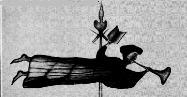
Weather vanes are another temple topper that has been used a few times.  The Kirtland Ohio Temple was built with a weather vane (the current one is a replica).  The original Nauvoo Illinois Temple had a weather vane angel that would have helped people determine the wind direction (you'll notice that the Nauvoo Temple had a lot of practical features for the community).  The St. George Utah Temple was built next and has a weather vane on its tower.  Similar weather vanes top the Logan Temple east and west center towers.  Today one faces north and the other faces south.  I assume that they originally rotated with the wind, but have since been replaced when the towers were replaced with fiberglass replicas.  The weather vanes on these three temples are all arrows.

The Cardston Alberta Canada Temple has no tower or spire, however its gently sloping pyramidal roof has a light or lantern at its peak, a fitting topper to a temple.

The remaining temples have had some sort of finial or spire when they haven't had Angel Moroni statues but have had towers.

Please comment and let us know what you think about these unique temple features from before Angel Moroni statues became standard.  I like these unique features and hope we keep them intact.

Wednesday, May 4, 2011

Colorful Temple Exteriors

White has become so synonymous with the temples of The Church of Jesus Christ of Latter-day Saints that we seem to forget the examples of temples that aren't white or any color remotely close to white.

The Kirtland Ohio Temple
Currently the Kirtland Ohio Temple is white (and not owned by the church).  Originally it had sparkling blue walls, a red roof, and green doors (the doors are still green).  Our first temple was clearly not white, but instead quite colorful.

The Logan Utah Temple
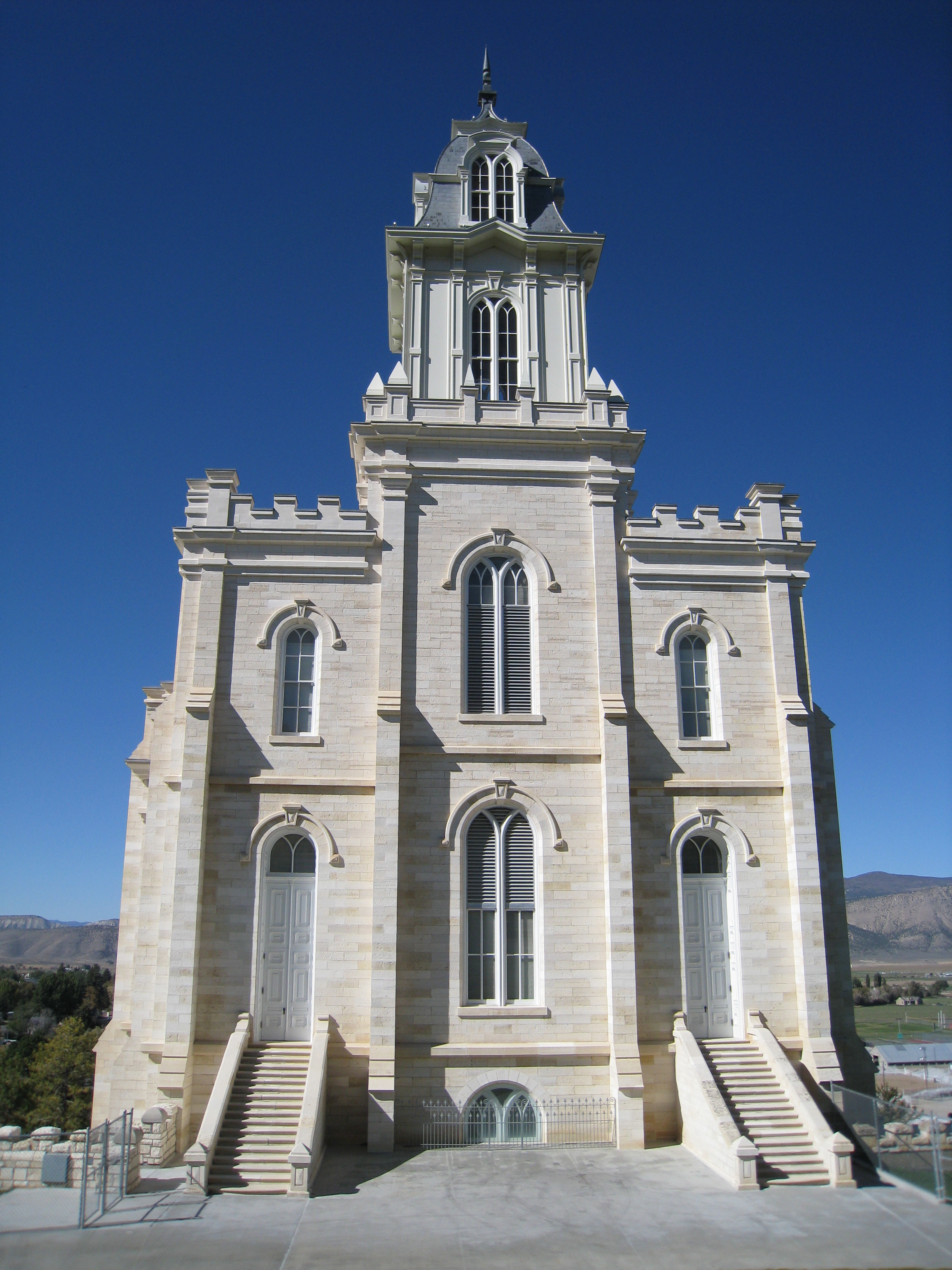
Today the Logan Temple is made of a dark brown stone.  Originally it was painted white (much like the St. George Utah Temple which is actually red sandstone stuccoed white).  The paint on the Logan Temple didn't weather very well and soon it looked horrible.  A decision was made to let the paint finish wearing off and to not repaint it.  This is how the temple is now with its dark brown walls.  The stone is really a nice color and contrasts nicely with the white towers (which are now fiberglass and not the original wood, if you wanted to know).  This also explains why the Logan Temple stones are somewhat rough cut and irregularly shaped blocks.  The builders thought the stones would always be covered.  Other temples such as Manti and Salt Lake have neatly arranged, fine cut, smoothed stone blocks because they were never intended to be painted.

The Vernal Utah Temple
The Vernal Temple is remodeled from the Uintah Stake Tabernacle which was made out of red brick.  Because of this the current temple is red.  White towers contrast nicely and add a touch of the familiar white usually symbolizing holiness. 

The Copenhagen Denmark Temple
The Copenhagen Temple is another temple remodeled from an existing building - this time a chapel.  The chapel was red brick, so the completed temple is also red brick and looks nice.  The red also makes details such as the front columns stand out.  I think this temple works, and the fact that it is red helps the temple's appearance in my opinion.

I find that the red is a wonderful symbol of the blood of Christ and the atonement in general.  All this red brick might also remind us that the first endowments were given in the upper floor of Joseph Smith's Red Brick Store in Nauvoo, Illinois before the Nauvoo Temple was completed.  Either way, I think that red is a wonderful color for a temple.

The Johannesburg South Africa Temple is made of brown brick which gives it a different look.

The last really colorful temple is the Newport Beach California Temple which is a nice pink color.  I like the look.  The color was a concession to neighbors that thought a white temple would have been too bright.  The temple is still really light colored, so I hesitate to list it with the above temples.  I suppose that the Albuquerque New Mexico Temple is also a pinkish hue.  There are other temples with slight shades of this color or that.  I don't need to list them all.  Most are kept really light, so the temples listed above are really the colorful ones.

Several other temples have dark accents.  The Fukuoka Japan Temple, for instance, has some dark stone.  The Snowflake Arizona Temple also has its first floor made out of darker stone than the lighter second floor.

That is the list of colorful temples (or temples that aren't white or light colored).  I don't think there are any others.  I like having temples white or light colors.  It is nice symbolism and is a nice look for these holy edifices.  Even so, there is something neat about these bolder temples with dark colors.  Maybe it is because they are so rare and unique.  Maybe it is because the white details on the temple seem so much brighter with darker details adding contrast.  There are probably many reasons.  I like how unique these temples are and wouldn't mind seeing a few more colorful or dark temples, even though I'd still prefer most temples to be light.

Please comment and let us know what you think.

Tuesday, April 5, 2011

Words as Temple Decoration

Several temples of The Church of Jesus Christ of Latter-day Saints use words to decorate the temple.  For example, at the entrance to the Cardston Alberta Temple there is this verse by Orson Whitney that I found here.  Here is the verse:

Where spreads a feast unknown to festive halls.
Freely partake, for freely God hath given
And taste the holy joys that tell of heaven.
Here learn of Him who triumphed o’er the grave,
And unto men the keys, the Kingdom gave;
Joined here by powers that past and present bind
The living and the dead perfection find.
 In other temples a verse of scripture is used.  In the Mesa Arizona Temple, above the celestial room doors (seen from the grand staircase) is part of D&C 93:36:
THE GLORY OF GOD IS INTELLIGENCE
I think it was also in the Mesa Temple (but may have been elsewhere) that the beatitude found in Matthew 5:8 is inscribed on a wall:

BLESSED ARE THE PURE IN HEART FOR THEY SHALL SEE GOD
The Idaho Falls Temple has  Habukkuk 2:20 on the wall in a foyer area:
BUT THE LORD IS IN HIS HOLY TEMPLE: LET ALL THE EARTH KEEP SILENCE BEFORE HIM.
Of course most temple exteriors contain the words:
HOLINESS TO THE LORD
THE HOUSE OF THE LORD
The Salt Lake Temple contains a scroll stone engraved with the words:
I AM ALPHA AND OMEGA
The original Nauvoo Temple had inscriptions in the lower assembly hall.  Above the Melchizedek Priesthood pulpits, following the arch of the ceiling in gilded letters were the words:
THE LORD HAS SEEN OUR SACRIFICE - COME AFTER US
Both the Kirtland Ohio and Nauvoo Illinois Temples had assembly halls with three initials on each of the 24 pulpits.  The Kirtland Temple had the Melchizedek Priesthood pulpits engraved with the following from top to bottom:

M.P.C. (Melchizedek Presiding Council)
P.M.H. (Presiding Melchizedek High Priesthood)
M.H.P. (Melchizedek High Priesthood)
P.E.M. (Presiding or Presidency Elders Melchizedek)
On the eastern Aaronic Priesthood side the initials are from top to bottom:

B.P.A. (Bishop Presiding over Aaronic Priesthood)
P.A.P. (Presiding or Presidency Aaronic Priests)
P.T.A. (Presiding or Presidency Teachers Aaronic Priesthood)
P.D.A. (Presiding or Presidency Deacons Aaronic Priesthood)
 This website claims that in the Nauvoo Temple the initials were, on the Melchizedek Priesthood side:

P.H.P. (President of the High Priesthood)
P.S.Q. (President of the Seventy Quorums)
P.H.Q. (President of the High priests Quorum)
P.E.Q. (President of the Elders Quorum)
 And on the Aaronic Priesthood side there were the initials:
P.A.P. (President of the Aaronic Priesthood)
P.P.Q. (President of the Priests Quorum)
P.T.Q. (President of the Teachers Quorum)
P.D.Q. (President of the Deacons Quorum)
The assembly hall in the Salt Lake Temple contains inscriptions above the pulpits on each end.  They are:
Aaronic Priesthood
and
Melchizedek Priesthood


The Manti Temple doorknobs contain what is claimed to be stylized Arabic (stylized to the point where the inscription cannot be interpreted today), a common art form used by Masons (the doorknob maker was a mason).  For more information, read the book The Manti Temple.  This book was printed to commemorate the centennial of the Manti Temple.

In Islam since images are often considered idol worship, their mosques and other buildings are often decorated with verses from the Koran, usually extremely stylized.  So using text to decorate religious architecture is not even unique to Christianity (which has many examples of using scriptures to decorate churches).  I also read a newspaper article a few years ago that featured an old Church of Jesus Christ of Latter-day Saints chapel with scriptures written on each of the roof trusses visible in the chapel.

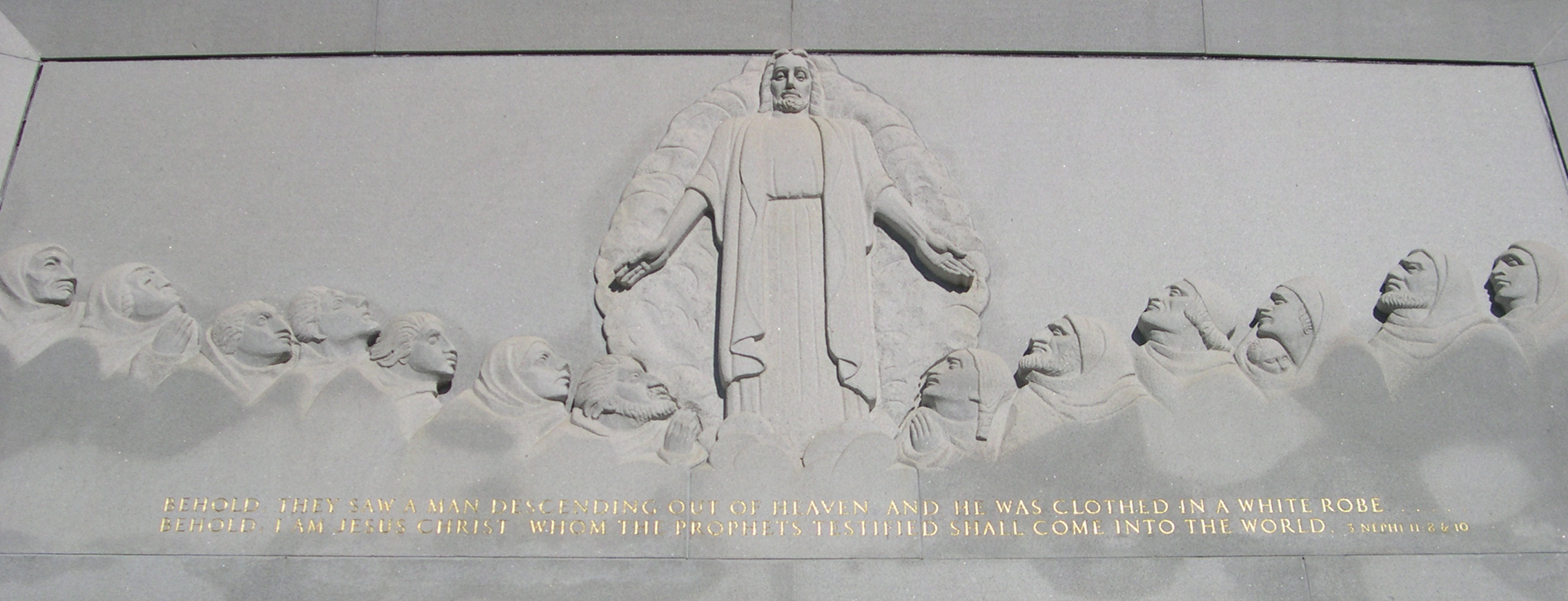
The Oakland California Temple has relief sculptures of Christ in the New Testament and The Book of Mormon on the temple exterior.  On the New Testament Side the inscriptions are:
BLESSED ARE THE PURE IN HEART FOR THEY SHALL SEE GOD -Matt 5:8
SEEK YE FIRST THE KINGDOM OF GOD AND HIS RIGHTEOUSNESS -Matt 6:33
On The Book of Mormon side it reads:
BEHOLD, THEY SAW A MAN DESCENDING OUT OF HEAVEN AND HE WAS CLOTHED IN A WHITE ROBE
BEHOLD, I AM JESUS CHRIST WHOM THE PROPHETS TESTIFIED SHOULD COME INTO THE WORLD- 3 Ne 11:2&10

There is also a large plaque quoting 3 Nephi 17 in the courtyard of the Oakland Temple.

Surely there are many more examples of words being used to decorate temples.  Words can remind of of scriptures and easily put us in the right frame of mind.  Also, they are easier to understand than the hidden symbols frequently used in temples.  Scriptures can bring the spirit and remind us of things we should be focused on.

Although not decorative, when the Logan Temple was gutted they found a wall full of engravings in the plaster hidden beneath the surface.  The inscriptions (with spelling errors galore) had names, mentioned that they were being persecuted, and gave other historical information.

I hope some of you know of engravings on temples and can add a comment telling us how words are used to decorate temples.  We can also discuss how words could be used in future temple architecture, or what you think of the inscriptions I have highlighted so far.  Please comment.

Sunday, March 20, 2011

Latter-day Saint Temple Murals - Pt 1 - The Beginnings of Temple Murals

Many temples of The Church of Jesus Christ of Latter-day Saints have murals painted on the walls of the endowment rooms and occasionally in other areas of the temple such as the baptistery.  I'm going to discuss the development of temple murals in a series of posts, beginning with this one.

The first Latter-day Saint temples didn't have murals.  The Kirtland Ohio Temple was mainly a place for revelation to be received and heavenly messengers (angels and Jesus Christ) to come and give instruction and priesthood keys necessary for future temple ordinances.  The Nauvoo Temple was the first temple where the endowment ceremony was performed.  In this temple, endowments were performed in the attic level partly because as the structure was built members didn't know the endowment was going to be performed there.  To administer the endowment, the room on the top floor was divided using curtains.  Each divided off room section was then used to represent the various parts of life - creation, the Garden of Eden, the current world, the terrestrial world, and finally the Celestial Kingdom of God (Heaven).  Potted plants may have been used to give the rooms some connection to what they were to represent.  The rebuilt Nauvoo Temple contains murals as a tribute to what the early saints may have eventually added if they had stayed in Nauvoo.

When the saints arrived in Utah they started building temples.  While these were under construction, the endowment was given in several places.  The council house (now across the street from the Utah State Capitol Building) was used with curtains dividing a room into endowment areas.  Then the Endowment House was built on temple square and it included potted plants and murals in various rooms.

The next temple built was the St. George Utah Temple in 1877.  It lacked endowment rooms.  One of the two assembly rooms was simply divided into the various rooms for the presentation of the endowment.  In 1881 proper walls were added and murals were painted.
St. George Utah Temple Garden Room

St. George Utah Temple World Room
The first temple with true planned endowment rooms with murals was the Logan Utah Temple.  The Logan Temple was planned with progressive endowment rooms with a lot of movement from room to room during the endowment ceremony.  This movement strengthened the teachings of the endowment.  Patrons would see murals depicting the various parts of the endowment and would move higher and higher in the temple as they moved through the endowment ceremony.  Unfortunately this also meant there were a lot of stairs in the Logan Temple and this partly led to the temple being completely gutted and rebuilt in the 1970s.  This remodeling destroyed (or sometimes simply removed) intricate pioneer craftsmanship, fine detailing, the pioneer murals, and the progressive setup of the endowment rooms.  The Logan Temple inspired the use of progressive endowment rooms with murals in the Manti and Salt Lake Temples, as well as many more temples until the 1950s when presenting the endowment on film temporarily ended the use of endowment room murals.  It is extremely sad that the Logan Temple remodel didn't include progressive endowment rooms or murals in the new endowment rooms currently being used.  Hopefully it will someday be re-remodeled with progressive endowment rooms, murals, and fine detailing - even if the exact room layout cannot be restored.
Original Logan Temple Creation Room
Original Logan Temple Garden Room
Original Logan Temple World Room
Original Logan Temple Terrestrial Room
The murals in these early temples were painted by the pioneers.  Many of these had experience and training from their native countries.  In a future posting I will talk about how the church encouraged the development of better murals and art in temples through the Paris Arts Mission.

Please comment and let us know what you think.

This is an addition to the original post:
The Logan Temple original celestial room also had murals painted on either end of the room.  One was of Joseph Smith going to the Hill Cumorah to receive the gold plates The Book of Mormon was translated from.  The other mural shows Joseph Smith and Oliver Cowdery receiving the Aaronic Priesthood from John the Baptist.  These murals were added to the room in 1929. (See The Logan Temple The First 100 Years by Nolan P. Olsen).  They weren't wrap around murals, and were essentially just huge paintings, but they are still murals and added to this temple.
Original Logan Temple Celestial Room With Mural

Wednesday, March 9, 2011

Kirtland Temple Symbols - Explanation part 1

In my last post I showed a few symbols from the Kirtland Temple.  Now I am going to explain some of them with a huge disclaimer.  Here is the disclaimer:
       In my research I discovered that the symbols were taken from 2 architectural books (dated 30 years apart) and are decorative details.

Okay, so what do I mean by that and why does it effect the symbol interpretation.  Well, this means that the symbols' meanings were probably unknown to the builders of the Kirtland Temple.  With other temples the symbolism can be found in documents from Joseph Smith, Brigham Young, or the builders.  Symbolism was intended.  With the Kirtland Temple the symbolism doesn't appear to be intended.  If this is the case, then any meanings we interpret from the symbols is either:

  (a) our wrong interpretation
   (b) possibly a correct interpretation that God arranged to be in the temple without the builders realizing it.

I like the idea of (b) being correct and that is great if it is, but from a scholarly perspective (a) is probably more accurate.  Nevertheless, I'll go ahead and state some interpretations of symbols which may or may not be what they mean.

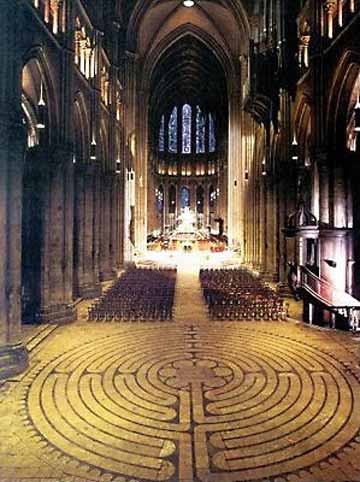
Labyrinth
This symbol is a labyrinth or maze.  Labyrinths are common in Christian churches and cathedrals as a symbol of the meandering journey through life.  As a temple symbol it could signify finding our way through life and the mysteries and knowledge that will show us that true way.  One problem with interpreting this symbol as a labyrinth is that most labyrinths only have one way (although that way is winding).

Gonfalone
This symbol is sometimes interpreted as a gonfalone, a type of flag or banner.  These banners are used in religious ceremonies in many Christian churches.  As a temple symbol it would remind us of "the standard of truth" and "an ensign to the nations" and "the title of liberty".  The biggest problem with this symbol being interpreted as a flag or banner is that it is upside down from any gonfalone I've ever seen.  It looks more like a 'w' to me, or maybe the Hebrew letter shin (sort of) which is related to 'w' and can also be used to represent God.

 Spiral
This symbol is a spiral which symbolizes progression ever closer and closer to the center (perfection, heaven, eternity, etc.).  The idea is that this is an upward spiral.


Squares Within Squares
This symbol is said to represent increasing zones of holiness.  The symbol would represent the temple as a sanctuary from the world with areas in the temple being holier and holier. It is the idea of the ancient temple's outer court, Holy Place, and Holy of Holies.  This symbol has been recycled in other temples with circles withing circles.  I'm guessing the symbolism wasn't intended in the Kirtland Temple, but was intended in other temple.

Those are some symbols.  Again, it is likely that they are purely decorative, or if actually symbolic, that the interpretations are wrong.  Regardless, they are beautiful and make for a finely crafted temple.

Sunday, February 27, 2011

Kirtland Temple Symbols - Overview

I am trying to find the meanings for each of the symbols used in the Kirtland Temple.  Many of the decorative carvings used in the Kirtland Temple look like they are just decorative, and I suspect many are purely decorative.  I also know that many of the symbols have added meaning.  Here are some symbols.  I will rIt is true that merely having more decoration on the main floor and in particular on the Melchizedek Priesthood side is symbolic even if the individual decorative carvings were not.  Here are pictures highlighting symbols you may have overlooked:


I do want to credit this site: http://temployeternidad.blogspot.com/2010_10_01_archive.html for giving me some information and the labyrinth picture.  I also got the drawings from this page.

If any of you know what these symbols mean, please comment.  I know only a few of their meanings.

Wednesday, November 3, 2010

The Church of Jesus Christ of Latter-day Saints' Temple Assembly Halls

Today I want to write about assembly halls in Latter-day Saint temples.  These are also known as solemn assembly halls, assembly rooms, priesthood assembly halls, priesthood assembly rooms, or priesthood rooms and were a part of the first 5 temples built and several built since.

Kirtland Temple Lower Court
The Kirtland Ohio Temple (1836) was essentially two assembly halls, one on top of the other.  The only other rooms were a few small ones in the attic area.  The lower room was designated for sacrament, preaching, fasting and praying.  The upper room was used for the school of the prophets, a school for Latter-day Saint apostles dealing with secular and religious subjects. Both assembly halls had very unique architecture.  The rooms had pulpits in the front and back.  One set was for the Melchizedek Priesthood leadership and the other was for the Aaronic Priesthood leadership.  The pulpits on each side consisted of 12 pulpits arranged in 4 rows of 3 pulpits.  Each pulpit had three letter initials on it designating who sat there.  The three pulpits on each row had the same initials.  These initials on the western Melchizedek Priesthood side are from top to bottom:

M.P.C. (Melchizedek Presiding Council) – First Presidency of church or stake
P.M.H. (Presiding Melchizedek High Priesthood) – Quorum of 12 Apostles or Stake High Council
M.H.P. (Melchizedek High Priesthood) – High Priests Quorum
P.E.M. (Presiding or Presidency Elders Melchizedek) – Elders Quorum Presidency

On the eastern Aaronic Priesthood side the initials are from top to bottom:

B.P.A. (Bishop Presiding over Aaronic Priesthood) – Presiding Bishopric of the church or local Bishopric
P.A.P. (Presiding or Presidency Aaronic Priests) – Priest’s Quorum Reps
P.T.A. (Presiding or Presidency Teachers Aaronic Priesthood) – Teachers Quorum Presidency
P.D.A. (Presiding or Presidency Deacons Aaronic Priesthood) – Deacons Quorum Presidency

The bottom pulpits on both sides included collapsible sacrament tables so the sacrament could be administered.

In the Kirtland Temple the assembly halls were extremely important because they are where Jesus Christ appeared, stood on the breastwork of a pulpit, and accepted the temple.  Then Moses, Elias, and Elijah came as angels and gave the priesthood keys of the gathering of Israel, the dispensation of the gospel of Abraham and “this dispensation”, and the sealing keys that allow ordinances to have power even beyond death allowing baptisms for the dead and eternal marriages to be performed, among other things.  See Doctrine and Covenants Section 110.


The Kirtland Temple assembly halls are also notable because each could be divided into 4 sections by dropping curtains allowing for 8 meetings to take place simultaneously.  The pulpits could also be separated from the rest of the room by curtains, functioning as a sort of Holy of Holies.  The seats were also reversible so the congregation could face either the Aaronic or Melchizedek Priesthood side depending on who was speaking or if the room was divided by curtains.  About 900 to 1000 people could fit in the lower assembly hall.  I’ve been in the Kirtland Temple and the craftsmanship is incredible.  Some people notice that the pews have doors on the row ends.  This isn’t unique to Latter-day Saints, but is actually a common feature of New England architecture.  The doors cut down on drafts in the room in winter time.


Nauvoo Temple Assembly Hall
The Nauvoo Temple (1846) was essentially a larger version of the Kirtland Temple, again with two assembly halls.  The upper assembly room may not have ever been finished (In the rebuilt temple this floor is filled with the endowment rooms and celestial room).  In the original Nauvoo Temple the endowment was presented in the attic level with the space divided into endowment “rooms” using curtains.  Baptisms for the dead were performed in the basement font.  The rebuilt Nauvoo Temple includes the first floor assembly hall, although it is a little smaller width wise.  I’ve seen the assembly room in the Nauvoo Temple on my visits there and it is beautiful.  The pulpits are very similar to those in Kirtland.  The original assembly room could seat about 3,500 people, although in the rebuilt temple the room is smaller and seat less people.  The words "The LORD Has Seen Our Sacrifice - Come After Us" were originally inscribed in gilded letters along the ceiling arch behind the east Melchizedek Priesthood pulpits on the first floor assembly hall.  I've noticed that the new temple has transmitters in the ceiling like those used for headsets used to listen to the endowment in another language.  I assume from this that meetings are broadcast to this temple with translations when needed.
 
St. George Temple Assembly Hall
The St. George Utah Temple (1877) was constructed similar to the Nauvoo Temple with two assembly halls.  Originally the lower hall was divided with curtains to make endowment "rooms".  In 1938 the lower assembly room was converted with walls dividing the space into endowment rooms and a celestial room.  The upper assembly hall is left intact and has Aaronic and Melchizedek Priesthood pulpits but instead of permanent pews it has removable chairs.


Logan Temple Assembly Hall
The Logan Utah Temple (1884) was build with endowment rooms on the lower floors and a single assembly hall on the top floor.  This one also has chairs instead of pews.  Although the Logan Temple was gutted and a new steel frame temple was built inside the stone exterior destroying the original pioneer craftsmanship and layout, it is my understanding that the assembly hall was left intact during the remodel and still occupies the top floor.  I know for a fact that you can see all the way through the temple on the top row of windows, so if they removed the assembly hall, they can't have replaced it with anything.
 
Manti Temple Assembly Hall
The Manti Utah Temple (1888) is similar to Logan with an assembly hall on the top floor.  This time pews are present.  The room has a seating capacity of 1,500 people according to the Millenial Star volume 50 printed in 1888.  Because the temple is on a hill, the east doors of the temple lead into this room whereas the west doors enter the endowment and sealing section of the temple several floors below.


Salt Lake Temple Assembly Ha
The Salt Lake Temple (1893) contains a large assembly hall on the top two floors which seats about 2,200 people.  The top two rows of windows on the temple main body (an arched row and an elliptical row) give light to the room.  The pulpit design breaks away from the Kirtland model (curved breastwork) and instead has podium style pulpits with 12 on each side.  Above the pulpits there is a canopy labeled "Aaronic" and "Melchizedek" on the respective sides (I think it also says Priesthood).  The hall also has a large balcony with spiral staircases.  This room is regularly used for meetings of General Authorities of the church (every Thursday I’ve heard) as well as occasionally for special temple worker meetings and meetings for bishops, etc..  The assembly hall was also temporarily used as a studio to film the endowment when it was first converted to a film format for the Bern Switzerland Temple.  Before the Missionary Training Center was built in Provo, missionaries were trained in Salt Lake City and had special devotionals usually led by an apostle or member of the first presidency in the temple assembly room before leaving on missions.  Here's a cool picture of the room under construction.
 
After the completion of the Salt Lake Temple, temples were built without assembly halls to save money as most temples don’t need them.  This was new as every temple up to this point had an assembly hall.  Another temple wouldn’t be built with an assembly hall for 63 years.


Los Angeles Temple Assembly Hall
The Los Angeles California Temple (1956) was a very large temple with more square feet than the Salt Lake Temple at the time of its construction (additions have made Salt Lake larger) and it included a priesthood assembly hall (because WWII delayed the groundbreaking an assembly hall was added to the plans).  The assembly hall has a very sleek modern design and is a very large room occupying the entire top floor of the temple. It is 300 ft long so the same length as a football field.

For 18 years after the LA Temple was completed temples were built without assembly halls.

Washington D.C. Temple Priesthood Room
The Washington D.C. Temple (1974) again had a priesthood assembly hall.  This one is a modern interpretation of the Salt Lake Temple priesthood assembly room with podium style pulpits.  This temple calls the room "the priesthood room" and it is located on the top floor of the temple.


The Portland Oregon Temple (1989) was the next temple containing an assembly hall.  According to ldschurchtemples.com the top floor contains an assembly hall and sealing rooms.  I’ve been in this temple and the celestial room has a staircase and upper level.  The upper level has a door that apparently leads to the sealing rooms and assembly hall.  I don’t know other details and I don’t have any photos so I don’t know if it follows the Kirtland pattern of 24 pulpits like every other assembly hall.
Portland Temple Assembly Hall
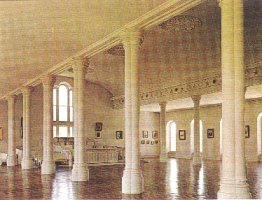
* addition - I have a picture of the assembly hall that I got from a Friend Magazine from 1993. It labels the picture as the temple chapel; however, I've been to the temple and know the chapel is downstairs and has a flat roof and pews.  This is clearly at the celestial room balcony level.  Although it doesn't use the 24 pulpits, I like it.
The Boston Massachusetts Temple (2000) was originally designed as a much larger structure complete with an assembly hall.  I talked with someone involved in the construction and was told that the plans were changed so the basement cafeteria rooms can be used as an assembly hall.  I don’t think there are pulpits there (I’ve been in the cafeteria but haven’t seen all the rooms in it) so I assume this hall would simply have solemn assemblies broadcast from other temples with pulpits.  I did notice that the cafeteria ceiling contained transmitters like those used for headsets used to listen to the endowment in another language, so I assume meetings are transmitted to the temple and translated if needed.

I should explain, temple assembly halls are used for solemn assemblies which are special meetings (usually priesthood meetings) held in the temple.  Meetings are regularly held for general authorities in the Salt Lake Temple.  I’ve heard that the church occasionally holds meetings in temple assembly halls for stake presidents or bishops around general conference and at other times, although I’m not sure how often these meetings are held.  One reason to include assembly halls in temples would be to allow for these special meetings.  Temple assembly rooms are also occasionally used for temple worker devotionals.  These meetings are held about once a year but they don't necessarily have to be held in an assembly hall.

Technically any temple with a chapel could use the chapel as an assembly hall for meetings not requiring the 24 pulpits.  With slight modifications these temples would allow for viewing solemn assemblies broadcast from other temple assembly rooms with the 24 pulpits.  Endowment rooms in other temples could also be modified to allow solemn assembly broadcasts if needed.  Also, although I love the symbolism involved with 24 pulpits showing the two priesthoods and the order in priesthood offices and presidencies, I’m not sure if there is any special ceremonial use of them during solemn assemblies or if a single pulpit would be acceptable.

Well I hope you've enjoyed this post.  Please post a comment or any questions you have.
I love the usage of assembly halls in temples of The Church of Jesus Christ of Latter-day Saints.  Although not necessary, they are great rooms with wonderful symbolism and I hope assembly halls are added in other temples from time to time.  I notice that all the current halls are located in the United States, although they do go coast to coast.  An assembly room in a foreign temple would be interesting.  Based on the history of these rooms I wouldn't expect them to be added very often, so we might be waiting a while.